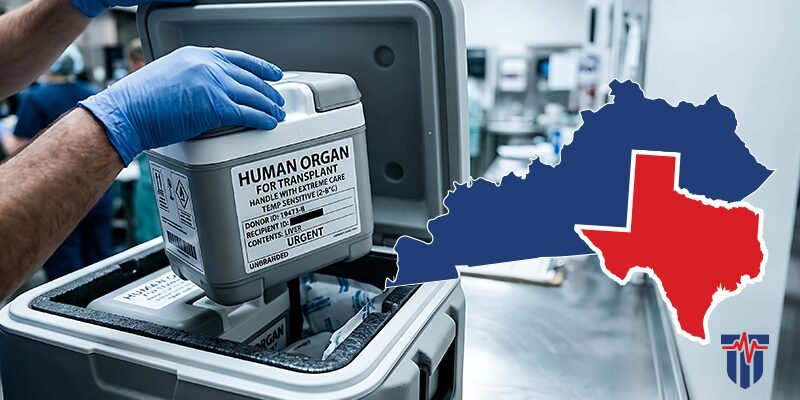
Before now, Kentucky had little to no protections in place to stop the organ harvesting process if a patient shows signs of life. This comes after multiple cases in which patients have suffered through this scenario. Scary, right?
Even more frightening… this issue is not limited to Kentucky. In Texas, families have reported similar experiences. We must also work to pass a similar law to protect Texas patients.
Earlier this summer in Houston, two-year-old Annalise Camp was hospitalized after a near-drowning and faced a premature brain death declaration.
But what is brain death? A 1968 definition says: A “irreversible coma as a new criterion for brain death,” moving beyond the historic standard of death being determined by the irreversible stopping of the heart. This was coined by the Ad Hoc Harvard Committee from Harvard Medical School. More controversially, this new definition of death developed as doctors began performing more organ transplants. There were not enough donated organs for everyone who needed one. Under the new brain death standard, severely injured patients could be declared dead while their hearts were still beating, allowing doctors to remove their organs for transplant. The ethics of brain death are still debated today.
As Texas lawmakers prepare to meet and make new laws in January, they need to strengthen the law so brain death decisions are made carefully, with clear rules, safety measures, and a chance for families to ask questions and seek another review.
The Organ Donation Pause in Procedure Act, Kentucky’s House Bill 510, was signed into law on April 7, 2026, and took effect July 15 this year. It requires organ harvesting to be halted if any involved party observes a change in condition inconsistent with death. These indicators include spontaneous movement, attempts to breathe or vocalize, responsiveness to stimuli, or cardiovascular changes that conflict with a determination of death.
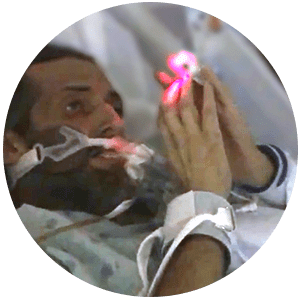
Take a look at the story of Kentucky man TJ Hoover: TJ was declared brain dead and was prepared for organ donation, or procurement, when he unexpectedly regained consciousness in 2021. According to reports, TJ began thrashing and crying as medical staff prepared to remove his organs. The incident prompted a federal investigation reviewing serious concerns about the organ donation process and whether some patients are being declared dead prematurely.
The investigation found serious problems. Federal officials found 73 cases where patients showed signs of brain activity that should have prevented their organs from being removed. In at least 28 cases, there were questions about whether the patients were actually dead when doctors began removing their organs. Some reports even described patients showing signs of distress during the process.
These findings raise serious questions about whether brain death is always being determined correctly.
Story continues below.

Don’t miss important Pro-Life stories like this.
>> Get the Pro-Life Weekly Highlight just once a week:
Nationally, more than 15,000 patients are declared brain dead each year, yet there is no single, uniformly applied standard governing how those determinations are made. Meaning, you could be declared brain dead in one hospital, and not in another across town that uses different protocols.
The main concerns surrounding brain death determinations are that some patients declared brain dead show signs of life.
Even more, the brain death declaration is a self-fulfilling prophecy. Whether the person is dead or not, when you remove their life-sustaining treatment and organs, they will be dead for sure.
Even more, these organ donations are extremely profitable for hospitals, raising concerns about living patients being viewed as more valuable for their organs than worthy of their individual lives.
While Kentucky’s new law adds another safeguard during organ removal, it does not change the disturbing reality: these patients may still be alive.
In Texas, current law allows life-sustaining treatment to be withdrawn following a brain death determination or under the 25-Day Rule in the Texas Advance Directives Act, even in cases where families object. These determinations can occur rapidly and without a defined process for independent review.
There are also serious concerns about how brain death tests are used. In some cases, doctors may use them to make end-of-life decisions faster when there is disagreement or uncertainty about a patient’s condition. One of the main tests, called the apnea test, temporarily removes a patient’s breathing support to see if they can breathe on their own. This test can be risky and is still debated by doctors and medical experts.
Texas law does not clearly guarantee a family’s right to challenge a brain death determination, obtain an independent evaluation, or decline certain high-risk tests. Cases in which patients later show neurological activity or partial recovery raise further concerns about whether safeguards are adequate.
Kentucky’s reform introduces a meaningful safeguard, but only at the final stage. It does not address earlier points where errors or uncertainty may arise.
In Texas, cases such as Annalise Camp’s illustrate the need for more comprehensive protections. Policy efforts in the 2027 legislature include:
- requiring confirmation of brain death by multiple qualified physicians,
- ensuring time and access for independent medical review,
- allowing patients or families to decline high-risk testing, and
- establishing a formal process to contest a determination.
At minimum, reforms should ensure that determinations of death are made under consistent standards, transparent procedures, and conditions that protect patient rights and family involvement. As the next legislative session approaches, Texas lawmakers must address these issues directly.
Thank you for reading this story! If you support our Pro-Life ministry, chip in with a life-saving contribution today!