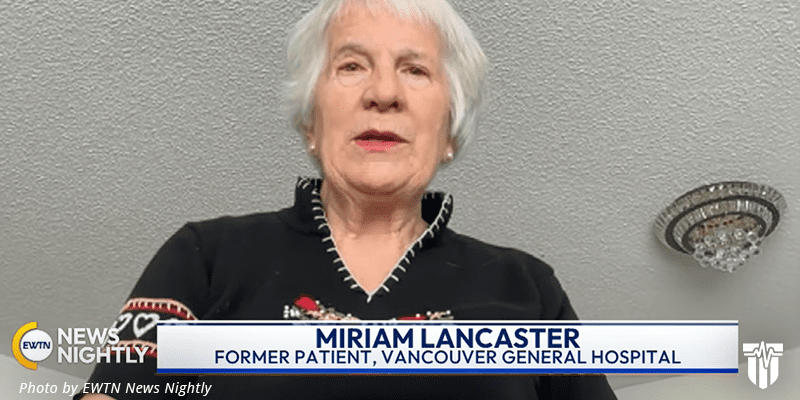
Canada’s Medical Assistance in Dying (MAID) program was first presented as a last resort for adults suffering from severe and irreversible medical conditions. This policy treated suffering people as if death were the solution instead of care and support. Now, the program is increasingly being offered to patients before any effort is made to treat them. One troubling example is the story of 84-year-old Miriam Lancaster.
Miriam was rushed by ambulance to Vancouver General Hospital after waking up with excruciating back pain. Scared and in agony, she expected doctors to focus on diagnosing the source of her pain. Instead, the first thing she remembers hearing was a young female doctor saying, “I would like to offer you MAID.”
MAID is Canada’s physician-assisted suicide program, which allows doctors or nurse practitioners to give patients drugs that end their lives. The law includes rules meant to protect patients, such as voluntary consent, approval from two independent medical professionals, and rules about who qualifies for serious medical conditions. However, these safeguards are insufficient given how quickly and frequently assisted suicide is being offered to patients.
Eventually, Miriam was transferred to another Hospital, where doctors discovered the true source of her pain: a tiny crack in the lower part of her spine/pelvis. Although surgery was not possible, she was prescribed bed rest and physical exercises for three weeks. In time, she recovered enough to return home.
Looking back on the experience, Miriam later reflected, “Oh, I’ve been given a second chance here. I am going to make the most of whatever time is left.” Instead of giving up hope, she embraced Life with a new sense of gratitude. She traveled with her daughter to Cuba, Mexico, and Guatemala, and even went horseback riding on a volcano.
Story continues below.

Don’t miss important Pro-Life stories like this.
>> Get the Pro-Life Weekly Highlight just once a week:
What makes Miriam’s story even more striking is that this was not her first encounter with MAID. Three years earlier, her husband was offered physician-assisted suicide at the same hospital. As practicing Catholics, both Miriam and her husband firmly reject the idea of intentionally ending their lives.
Stories like Mariam’s raise serious concerns about the growing use of assisted suicide. Her experience is not an isolated case. Kristen, an American woman living in Canada, shares a similar story. As she battled ovarian cancer, she and her family rejected a Canadian doctor’s assessment that MAID was an appropriate option. Ultimately, they left Canada and traveled to the United States in search of continued treatment and care.
Amanda Achtman, who runs a project focused on restoring a culture that values Life, explains that “simply having euthanasia offered already kills a person, because it deflates and defeats a person’s sense of self-worth, self-esteem, and of value.”
For many people of faith, the growing acceptance of euthanasia reflects a broader cultural shift away from the dignity and the God-given value of every human life. Scripture reminds us in Jeremiah 1:5, “Before I formed you in the womb, I knew you.” Every person is uniquely created, known, and loved by God, and every life possesses inherent value.
So how can we help build a culture that values life instead of encouraging premature death?
- Pray and Fast – We are, as Paul said in Ephesians 6:12, not contending against flesh and blood, but against spiritual forces of evil. We are in a spiritual battle to not only save lives but also souls. Prayer is powerful, and fasting strengthens our dependence on God. Whether it means giving up food, limiting screen time, or sacrificing small comforts, fasting can help direct our hearts toward God.
- Encourage hope – In John 16:33, Jesus tells us that we will face suffering in this world, but we should be of good cheer because He has overcome the world! We should always have hope and bring all of our troubles to the Lord. People facing illness, loneliness, or despair need compassion, support, and reminders that their lives still matter.
- Educate others – Finally, we must educate our peers. Future generations should understand both the dangers of a culture of death and the immeasurable value of every human life. By speaking openly, compassionately, and truthfully, we can help create a society that chooses care over despair and Life over death.
Thank you for reading this story! If you support our Pro-Life ministry, chip in with a life-saving contribution today!